JVM钩子hooks函数
Java进阶

作者: 西魏陶渊明 博客: https://blog.springlearn.cn/
!!! tip 西魏陶渊明 莫笑少年江湖梦,谁不少年梦江湖 !!!
什么是钩子函数,在学习钩子函数之前,小编先提一个问题。
请问在Spring中,如果JVM异常终止,Spring是如何保证会释放掉占用的资源,比如说数据库连接等资源呢?
钩子函数非常简单,简单到小编只用摘抄一段Spring代码即可。走你,现在开始。
问题
Spring 容器中 Bean 在什么时候执行销毁方法?
我们知道在Spring中定义销毁方法有两种方式
- 实现
DisposableBean的destroy方法。 - 使用
@PreDestroy注解修饰方法
text
1@Component
2public class DataCollectBean implements DisposableBean {
3
4    /**
5     * 第一种方法实现 DisposableBean#destroy方法
6     *
7     * @throws Exception 异常
8     */
9    @Override
10    public void destroy() throws Exception {
11        System.err.println("执行销毁方法");
12    }
13
14    /**
15     * 第二种方法使用PreDestroy注解声明销毁方法
16     */
17    @PreDestroy
18    public void customerDestroy() {
19        System.err.println("执行自定义销毁方法");
20    }
21
22
23}
24
那么在什么时候执行销毁方法?
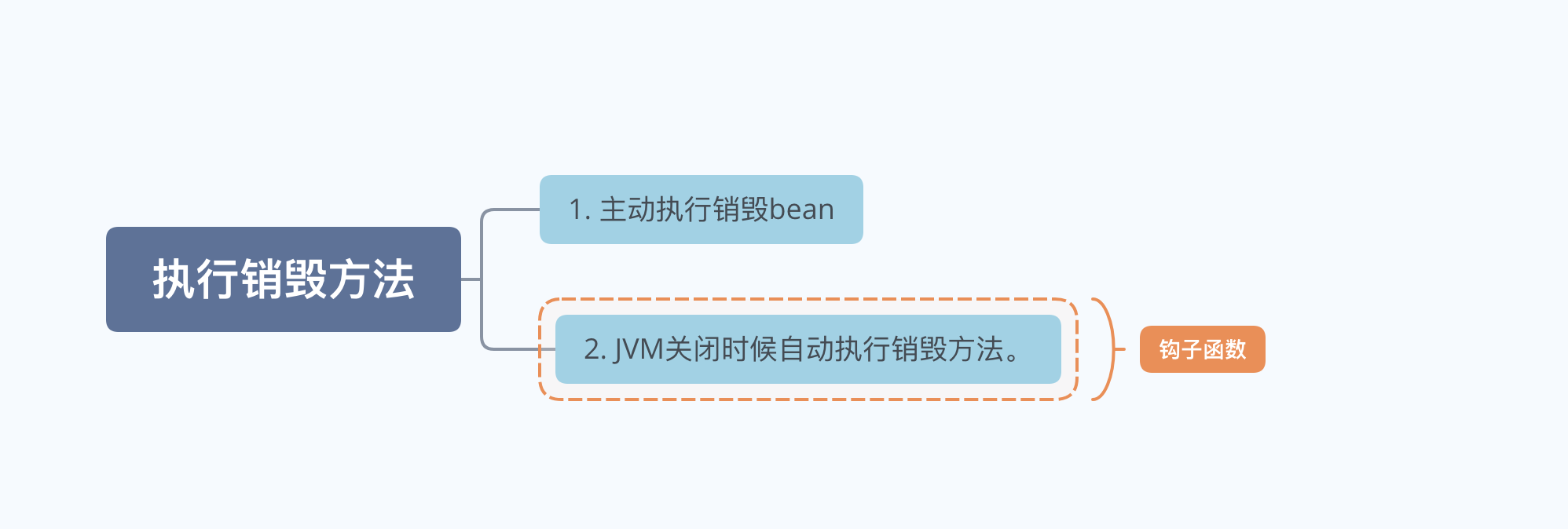
- 主动执行销毁bean
text
1    public static void main(String[] args) {
2        ConfigurableApplicationContext run = SpringApplication.run(DemoApplication.class, args);
3        DataCollectBean bean = run.getBean(DataCollectBean.class);
4        //1. 主动销毁bean
5        run.getBeanFactory().destroyBean(bean);
6 }- JVM关闭时候自动执行销毁方法。
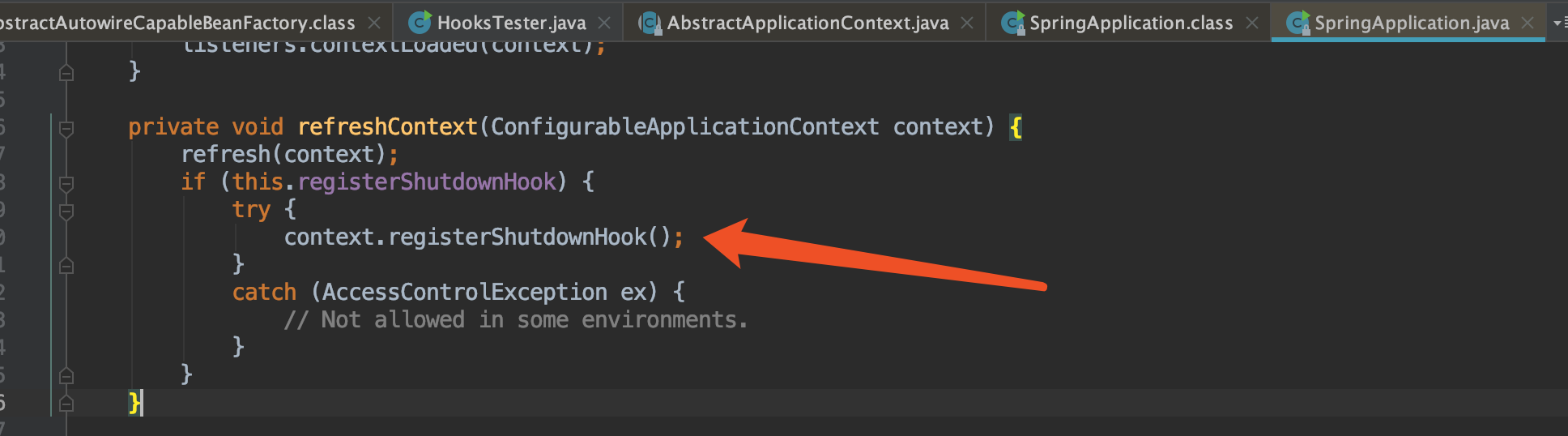
这里就要用到钩子函数了, Spring 的钩子函数在 AbstractApplicationContext#shutdownHook属性
如果我们是SpringBoot项目我们看到在SpringApplication启动时候会注册一个钩子函数
如何定义钩子函数?
简直太简单了,没有任何学习成本。一行代码就能搞定。
text
1public class HooksTester {
2    public static void main(String[] args) {
3        Runtime.getRuntime().addShutdownHook(new Thread(new Runnable() {
4            @Override
5            public void run() {
6                System.out.println("钩子函数执行");
7            }
8        }));
9        //当主动关闭应用
10        while (true);
11    }
12}
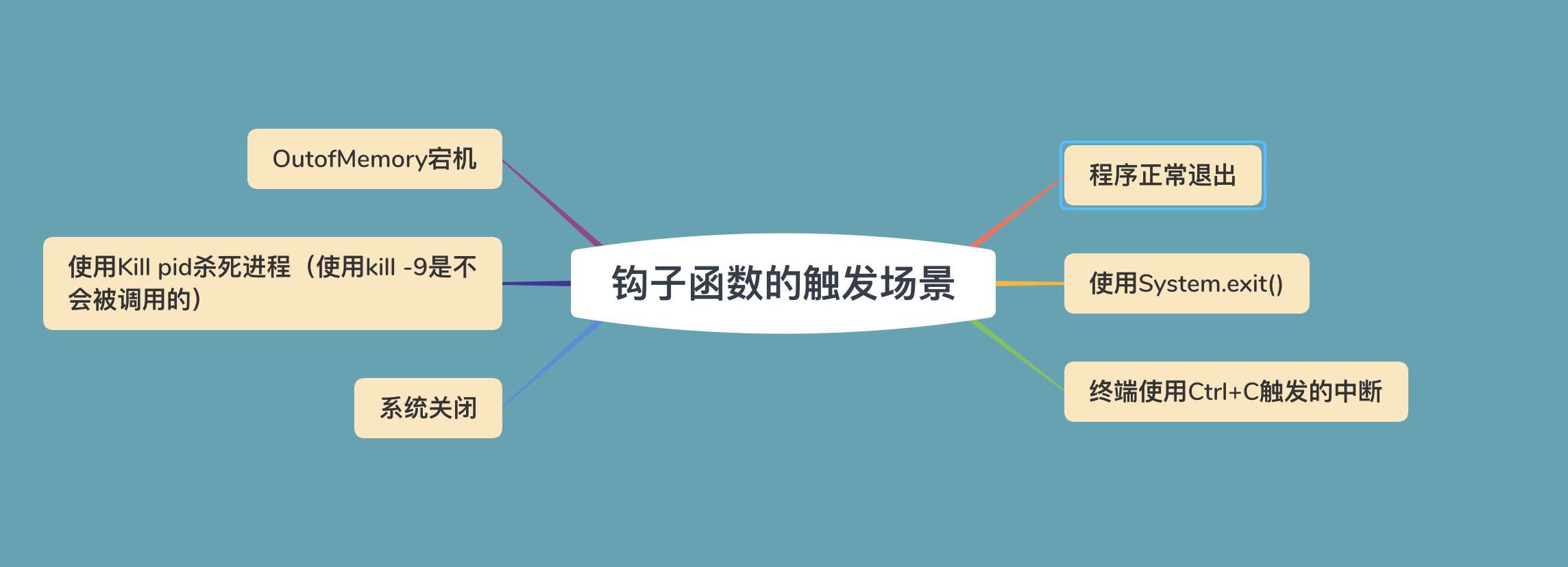
触发钩子函数的场景
只要不是机器断电,强制kill -9 强制杀进程,都会触发。
钩子函数能做什么?

正如上图所示优雅停机,在项目将要关闭时候,主动释放程序占用的资源信息,释放db连接池的连接等其他占用的资源信息。
如果我们是 Spring 项目其实我们不用自己定义钩子函数,我们只要使用Spring提供给我们的销毁方法即可。因为
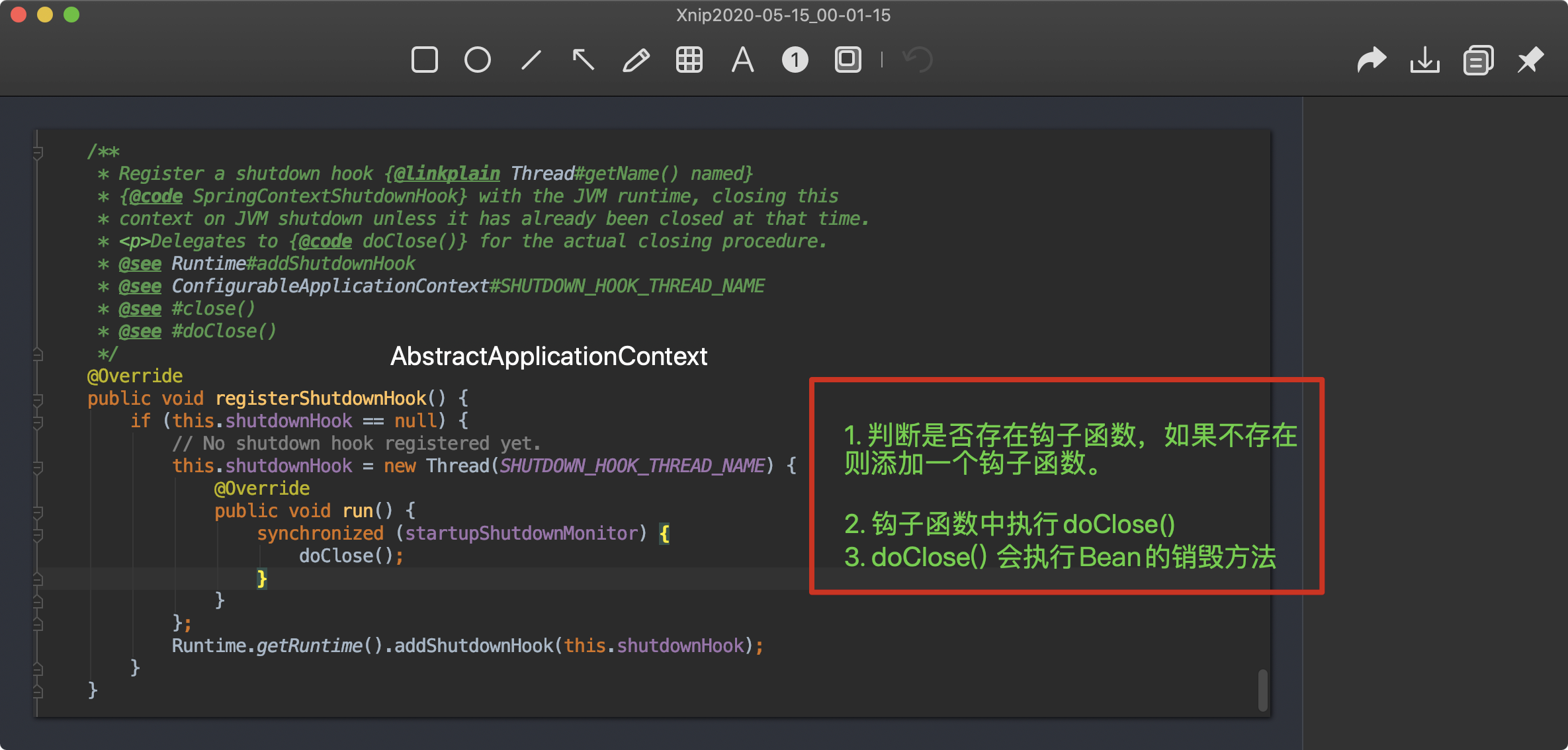
Spring定义的钩子函数中会去执行, DisposableBean.destory() 和被 PreDestroy 修饰的方法。
我们看下源码
text
1protected void doClose() {
2		// Check whether an actual close attempt is necessary...
3		if (this.active.get() && this.closed.compareAndSet(false, true)) {
4			if (logger.isDebugEnabled()) {
5				logger.debug("Closing " + this);
6			}
7
8			LiveBeansView.unregisterApplicationContext(this);
9
10			try {
11				// Publish shutdown event.
12				publishEvent(new ContextClosedEvent(this));
13			}
14			catch (Throwable ex) {
15				logger.warn("Exception thrown from ApplicationListener handling ContextClosedEvent", ex);
16			}
17
18			// Stop all Lifecycle beans, to avoid delays during individual destruction.
19			if (this.lifecycleProcessor != null) {
20				try {
21					this.lifecycleProcessor.onClose();
22				}
23				catch (Throwable ex) {
24					logger.warn("Exception thrown from LifecycleProcessor on context close", ex);
25				}
26			}
27
28			// Destroy all cached singletons in the context's BeanFactory.
29			destroyBeans();
30
31			// Close the state of this context itself.
32			closeBeanFactory();
33
34			// Let subclasses do some final clean-up if they wish...
35			onClose();
36
37			// Reset local application listeners to pre-refresh state.
38			if (this.earlyApplicationListeners != null) {
39				this.applicationListeners.clear();
40				this.applicationListeners.addAll(this.earlyApplicationListeners);
41			}
42
43			// Switch to inactive.
44			this.active.set(false);
45		}
46	}
可以看到:doClose()方法会执行bean的destroy(),也会执行SmartLifeCycle的stop()方法,我们就可以通过重写这些方法来实现对象的关闭,生命周期的管理,实现平滑shutdown
最后求关注,求订阅,谢谢你的阅读!